
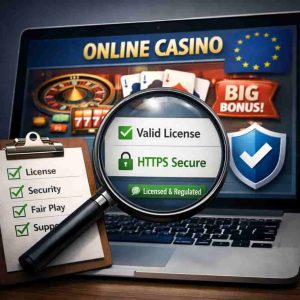
 Since the UK tightened its gambling rules, more players have started looking at online casinos Europe for alternatives. Some are solid. Others are best avoided. The problem is that they often look the same on the surface. Slick websites. Big bonuses. Familiar games. But legitimacy matters. It affects whether your money is safe and whether you get paid if you win. Here’s how to tell the difference.
Check the gambling licence first.
This is the most important step. A legit EU casino will clearly display its licence information, usually at the bottom of the site. If you have to hunt for it or can’t find it at all, that’s a red flag.
Most reputable EU casinos are licensed by regulators such as the Malta Gaming Authority or the Curaçao eGaming. Malta is generally seen as the gold standard in the EU. Curaçao licences are common too, but quality varies more, so you need to look closer.
A licence number should be listed and clickable. You should be able to check it on the regulator’s official site. If the licence can’t be verified, walk away.
Understand the UK-facing status.
Many EU casinos are not UK-licensed but still legally accept UK players under their own licences. That’s not automatically a problem. But it does mean UK consumer protections may not apply. A trustworthy EU casino will be upfront about this and won’t pretend to be UK-regulated when it isn’t. If you see UK flags, pounds sterling, and UK-focused marketing alongside vague licensing details, take extra care.
Look for strong player protection tools.
Legit casinos care about responsible gambling, even if they’re not UK-licensed. Check whether the site offers:
- Deposit, loss, and session limits
- Self-exclusion tools
- Cooling-off periods
- Clear links to responsible gambling support organisations
These features should be easy to find in the account settings, not buried in terms. A casino that ignores player protection is more likely to cut corners elsewhere.
Review payment methods and security.
Payment options tell you a lot. Reputable EU casinos support well-known methods such as debit cards, bank transfers, and established e-wallets. Many also accept cryptocurrencies, which isn’t a problem by itself, but it shouldn’t be the only option. The site should use HTTPS encryption. You’ll see a padlock in your browser bar. If payment pages look clunky, redirect strangely, or ask for unnecessary personal details, stop there. Also, check withdrawal rules. Legit casinos clearly explain processing times and fees. Vague wording like “withdrawals may take some time” is not good enough.
Read the terms, especially the bonus rules.
Big bonuses are common at EU casinos. That’s fine. What matters is how realistic the conditions are.
Look closely at wagering requirements, maximum withdrawal limits, and game restrictions. If a bonus requires extremely high wagering or excludes most games, it may not be worth taking. Pay special attention to withdrawal caps linked to bonuses. Some shady casinos use these to limit payouts after big wins. A legit casino sets fair limits and explains them in plain language.
Check the games and software providers.
Licensed casinos work with established software providers. You’ll usually see familiar names listed on the site or in the game lobby. Games should load smoothly and include information about return-to-player percentages and fairness testing. Many legit EU casinos use independent auditors to verify game fairness. While not always required, it’s a good sign when they do. If games feel buggy, slow, or lack basic information, that’s another warning sign.
Test customer support before depositing.
Good support matters more than most players realise. Try contacting support before you sign up or deposit. Ask a simple question and see how they respond. Legit casinos offer multiple contact options, such as live chat and email. Responses should be clear and professional. If support is slow, evasive, or unhelpful now, it won’t improve when there’s a problem with your money.
Look beyond reviews and affiliate hype.
Online reviews can help, but be careful. Many are written by affiliates who earn money for referrals. They tend to gloss over problems. Instead, look for consistent complaints across forums or independent platforms. Pay attention to patterns. One angry review means little. Dozens of players reporting delayed withdrawals or closed accounts mean a lot. Also, check how long the casino has been operating. Longevity doesn’t guarantee honesty, but fly-by-night sites rarely last long.
Trust your instincts, but verify them.
If something feels off, it usually is. Legit EU casinos don’t need to pressure you with countdown timers, fake scarcity, or aggressive pop-ups. EU casinos can be a good option for UK players, but only if you choose carefully. The safe ones are transparent, regulated, and fair. The rest rely on players not looking too closely.